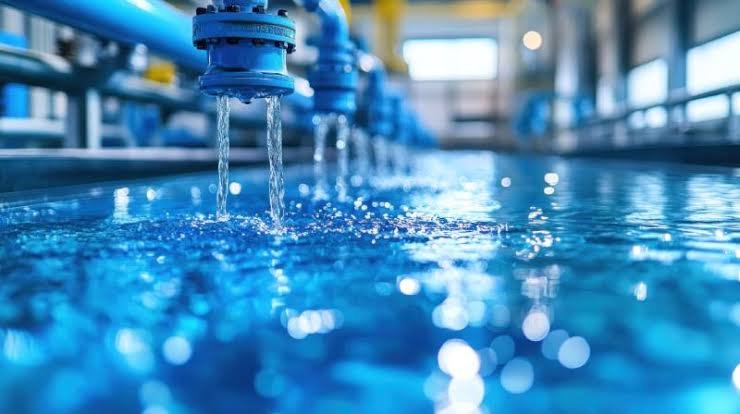
Water is easy to take for granted until a business depends on it for nearly everything. Restaurants need it for food preparation and cleaning. Hotels use enormous amounts of water every day. Manufacturing facilities may rely on carefully controlled water for equipment and production processes. Even an office building can run into trouble when water quality affects plumbing, fixtures, or building systems.
That’s why commercial water treatment needs to be approached differently from residential treatment. The system has to fit the property, the workload, and the purpose for which the water is being used.
Business Water Needs Are Rarely One-Size-Fits-All
A small café and a large manufacturing plant may both need treated water, but their requirements couldn’t be more different.
Flow rates, peak demand, operating hours, water chemistry, equipment, available space, and maintenance schedules all influence system design. This is why commercial / industrial water treatment should begin with an assessment rather than a generic equipment package.
A system that works perfectly in one building may be completely unsuitable in another. Getting the sizing and treatment technology right from the beginning can save headaches later.
Start With Understanding the Water
The first step in any serious water-treatment project should be understanding what is actually present in the water.
Hardness, chlorine, sediment, dissolved minerals, metals, microorganisms, and other characteristics can affect how water performs in a commercial or industrial environment.
Testing provides a useful baseline. It can reveal whether the primary concern is scale, taste and odor, corrosion, process-water quality, or something more specific.
Once the water is understood, treatment specialists can identify technologies that make sense for the application.
Custom Treatment for Real-World Operations
Businesses rarely operate according to a neat template. A restaurant has busy service periods. A hotel experiences predictable peaks in guest water use. A manufacturing facility may operate around the clock.
That’s where custom solutions for your business needs become important.
A customized approach can account for water demand, equipment requirements, available installation space, operational schedules, and future growth. It may involve one treatment technology or several working together.
For example, a commercial facility might need softening to control scale while also using filtration to improve water quality. An industrial application may require more advanced technologies such as reverse osmosis or specialized treatment designed around a particular production process.
The point isn’t to add more equipment. It’s to use the right equipment.
Why Hard Water Can Be Expensive
Hard water is more than a cleaning nuisance in a commercial environment.
Calcium and magnesium can contribute to scale inside water heaters, boilers, dishwashers, laundry equipment, cooling systems, and other water-using machinery. Over time, deposits can affect performance and increase maintenance demands.
For a business, those issues can have a bigger financial impact than they would in a typical household.
Unexpected maintenance can interrupt operations. Equipment downtime can affect employees and customers. In a production environment, even a short interruption may have significant consequences.
Water softening and conditioning can therefore be an important part of preventative equipment care when hardness is a known concern.
Reliable Water Supports Reliable Operations
The goal of a commercial treatment system isn’t simply to produce technically improved water. It needs to do so consistently.
Businesses need reliable, high-quality water throughout the working day, including during periods of peak demand. That means system capacity and flow rates need careful consideration.
Reliability also depends on maintenance. Filters have to be replaced, treatment components inspected, and control systems checked when necessary.
A system that performs well for six months but is difficult to maintain isn’t a particularly useful long-term investment.
Think About the Cost of Ownership
Initial equipment price is important, but it shouldn’t be the only number on the table.
Businesses should consider installation, energy and water consumption, replacement filters, salt or other consumables, routine servicing, and expected equipment life.
A less expensive system may not always be cheaper to operate. Conversely, the most sophisticated equipment isn’t automatically the best investment.
The sweet spot is a system that provides the required treatment without creating unnecessary operating costs.
Service Matters After Installation
Commercial and industrial treatment equipment often requires more attention than residential systems. When something goes wrong, waiting days for assistance may not be practical.
Before selecting a provider, ask about installation support, preventive maintenance, emergency repairs, replacement parts, and service response.
It’s reassuring to know that the company supplying the equipment also understands how to keep it running properly.
Plan for the Future
Business water needs can change. A restaurant may expand. A hotel may add rooms. A manufacturing facility may increase production.
A treatment system should ideally be selected with some awareness of future demand.
That doesn’t mean oversizing everything from day one. It means discussing expected growth and understanding whether the system can be expanded, upgraded, or adjusted later.
Planning ahead can be much easier than replacing an inadequate system after the business has already grown.
The Right Water System Is a Business Decision
For commercial and industrial properties, water treatment is part of a larger operational picture. It can affect equipment, maintenance, efficiency, customer experience, and continuity.
The best solution begins with a clear understanding of the water and the business using it. From there, treatment technology, capacity, installation, and maintenance can be designed around real requirements.
Whether the goal is reducing scale, improving process water, protecting equipment, or delivering better-quality water throughout a facility, the smartest approach is rarely a generic one.
A properly designed treatment system should simply do its job — quietly, consistently, and reliably — so the business can focus on everything else.